Italy Itineraries
10 days in Italy: Rome, Florence and Venice
This ten-day Italy itinerary connects Rome, Florence and Venice in one direction, with enough time to understand each city instead of changing hotels every night. It includes arrival and departure, protects the two train days, and limits most days to one reservation plus a walkable area. Use it as a framework, then shape it around your flights, interests and access needs.
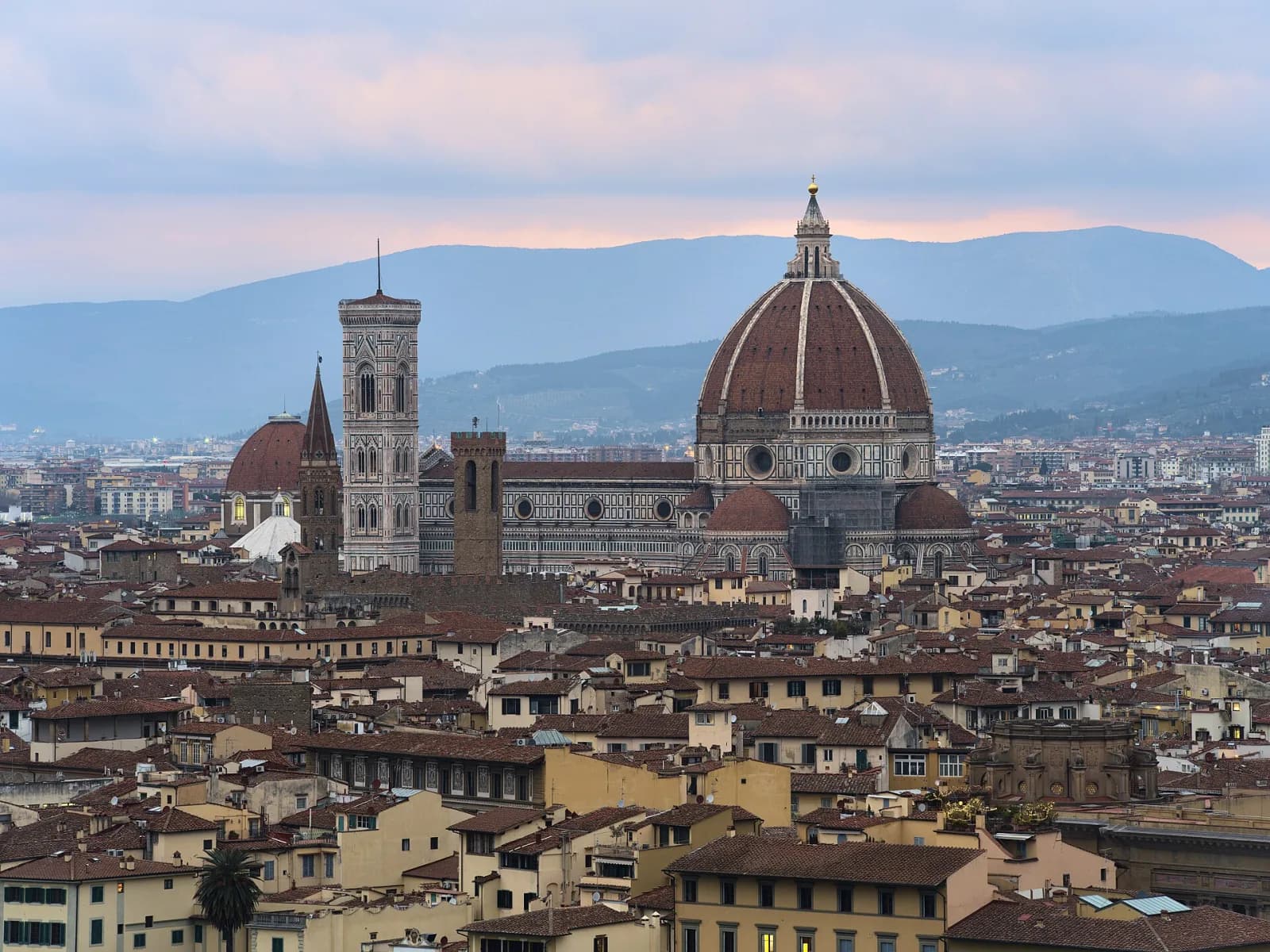
Photo: Dllu · CC BY-SA 4.0 · Cropped for layout.
- Trip length
- 10 days · 9 nights
- Overnight bases
- Rome · Florence · Venice
- Route
- South to north by train
- Pace
- One main reservation most days
In this guide
The short version
The route in one minute
Spend four nights in Rome, three in Florence and two in Venice. Arrive in Rome on day 1, travel north to Florence on day 5 and continue to Venice on day 8, then depart on day 10. This version works best with a flight into Rome and out of Venice. It is a first-trip route, not an attempt to cover all of Italy.
Your 10-day Italy itinerary at a glance
Rome, Florence and Venice form a coherent first route because northbound rail services connect the three cities. Italy’s official tourism site presents each as a major art city with a distinct character; this plan gives them separate blocks rather than treating them as day trips. Explore the official Italy overview.
Swipe or scroll to see all columns.
| Day | Main plan | Sleep in |
|---|---|---|
| 1 | Arrive, check in and explore near the hotel | Rome |
| 2 | Colosseum, Roman Forum and Palatine area | Rome |
| 3 | Vatican Museums and time in Prati | Rome |
| 4 | Pantheon, Piazza Navona and central Rome | Rome |
| 5 | Train to Florence and an introductory walk | Florence |
| 6 | Uffizi and the Oltrarno side of the river | Florence |
| 7 | Accademia or another Florence focus | Florence |
| 8 | Train to Venice and a quiet first walk | Venice |
| 9 | St Mark’s area and one unhurried neighborhood | Venice |
| 10 | Check out and depart | — |
The nights matter as much as the attractions: four in Rome, three in Florence and two in Venice. If your international flights use the same airport, redesign the last part before booking hotels. Do not depend on a long return to Rome immediately before a separate flight.
Book the route before booking every hour
Start with arrival and departure, then accommodation and the two intercity journeys. Compare the date, stations, fare conditions and current schedule on an operator’s own website. Trenitalia’s Frecciarossa network includes the Venice–Florence–Rome corridor, but the service you need still depends on your date. Check Trenitalia’s official network and booking links.
Next, choose one priority sight in each city. Reserve that before filling the surrounding day. Use the attraction’s official portal, read what the ticket includes and record the named visitor, entry time, meeting point and cancellation conditions. Search ads and similar-looking domains can lead to third-party products.
Day 1: arrive in Rome and learn your neighborhood
Make today about reaching the hotel. Keep its address and arrival instructions accessible, confirm how late check-in works, and use a current estimate for the airport or station transfer. After settling in, choose a short walk and dinner nearby rather than crossing Rome for a famous first-night view.
Use the walk to find breakfast, a transport stop and the route back to your room. If you arrive early and feel well, add one public square or viewpoint without a reservation. If you arrive late, stop after dinner. Day 4 can absorb a central-Rome sight you miss today.
Day 2: Ancient Rome without racing across the city
Build the day around the official Colosseum entry you select. The archaeological park offers tickets that combine the Colosseum with the Roman Forum and Palatine, with rules tied to the booked entry. Read the current ticket page closely instead of assuming every option covers the same areas. Review official Colosseum tickets and conditions.
Put the Forum and Palatine in the same part of the day; they belong geographically and thematically with the Colosseum. Wear shoes you can manage on uneven outdoor surfaces, carry suitable weather protection and allow a real break for food. Do not add the Vatican Museums or a distant evening booking simply because a map makes Rome look compact.
If archaeology is not your group’s priority, shorten the outdoor section and spend the later afternoon around Monti, the Capitoline area or back near the hotel. Keep any museum addition optional until you know how much energy the main visit takes.
Day 3: Vatican Museums and a less crowded second half
Reserve the Vatican Museums from their official portal and make that the day’s fixed point. The museums specifically warn that similarly named websites may charge more, so verify the domain before paying.Use the official Vatican Museums information and ticket link.
Vatican City contains more than one visitor experience. Do not treat a museum booking as automatic access to every nearby site. Check the current arrangements for anything else you want to enter, and leave a respectful margin around religious services or closures.
After the museums, have lunch in Prati or choose a riverside walk. Add St Peter’s Square or another nearby stop only if the day still feels comfortable. A second major museum is unlikely to improve a first visit after several hours inside the Vatican Museums.
Day 4: connect Rome’s historic center on foot
Use today for a central route rather than another list of distant monuments. One practical order is Piazza Navona, the Pantheon, the Trevi Fountain and the Spanish Steps, adjusted around your hotel and any current entry reservation. Italia.it emphasizes that Rome’s historic center requires choices, which is exactly the point of this lower-pressure day. Read the official historic-center overview.
Stop for coffee, lunch or a return to the hotel instead of treating every square as a checkpoint. Visit the Trevi Fountain according to current local access arrangements and respect barriers around all monuments. If day 1 was disrupted, use this afternoon for the missed neighborhood walk.
Art-focused swap: replace part of this route with one museum you care about, booked through its official site. Do not add it on top of the full walk. Outdoor swap: use a park or a section of the Appian Way and save the central route for a later Rome visit.
Day 5: travel to Florence and keep the afternoon open
Check out, reach the correct Rome station and take the train you booked to Florence. Keep documents, payment, a charging cable and hotel details in the day bag. On arrival, store or leave luggage only under your accommodation’s confirmed arrangements.
After check-in, make a simple orientation loop through Piazza del Duomo, Piazza della Signoria and toward Ponte Vecchio. Florence’s historic center places the cathedral, Palazzo Vecchio, Uffizi and Ponte Vecchio in the same central area, so there is no need for a museum reservation on the transfer day. See the official Florence historic-center guide.
End wherever dinner and the route back to your room make sense. Save climbs, galleries and the Oltrarno hills for days with more control over the start time.
Day 6: Uffizi, a long lunch and Oltrarno
Give the Uffizi the morning or afternoon slot you deliberately chose. The museum lists its official online ticket platform and other purchase methods; follow that page for availability and current visitor information. How to buy official Uffizi tickets.
Choose a limited set of rooms or artists to follow rather than trying to memorize an entire collection. Afterward, take a proper break. Cross the Arno only when you are ready for a different pace.
In Oltrarno, choose between streets around Santo Spirito, a visit you have booked at Pitti or Boboli, or a walk toward a viewpoint if the route and weather suit you. These are alternatives, not a list to complete after a major gallery. Keep the evening near dinner or the hotel.
Day 7: choose the Florence experience you value most
If seeing Michelangelo’s David is a priority, reserve the Accademia and make it today’s fixed visit. The gallery identifies B-Ticket as its authorized online channel and recommends reservations when waits may be long. Check the Accademia’s official ticket guidance.
Pair the gallery with San Lorenzo, Santa Maria Novella or free time near the historic center. A cathedral dome or bell-tower climb is a separate physical and reservation decision; choose it instead of a second major museum, confirm the current access conditions, and do not assume everyone in the group wants the climb.
Less museum time: make this a market, workshop and neighborhood day. More Tuscany: replace the whole day with one carefully planned day trip, accepting that you will lose a Florence day. Check the actual transport and opening days before choosing the destination.
Day 8: travel to Venice and learn the route to your hotel
Take the Florence–Venice train selected for your dates, then slow down. Venice requires a more deliberate luggage plan than a city where a taxi can reach every door. Ask the accommodation for the recommended arrival stop, walking route, bridge information and check-in instructions before departure.
After settling in, explore nearby rather than walking straight to every landmark. Cannaregio can work as a gentle first area if it is close to your route; Dorsoduro or Castello may suit a hotel elsewhere. Pick one neighborhood and learn the nearest water-transport stop.
Day 9: St Mark’s area, then quieter Venice
Choose St Mark’s Basilica, the Doge’s Palace or both, but treat them as distinct visits. The basilica is an active place of worship, and visitor access can be suspended; its official site provides current booking choices and rules. Check the official St Mark’s Basilica portal.
The Doge’s Palace has its own official visitor information and ticket options. Read what your chosen ticket includes instead of assuming every St Mark’s-area pass covers the same spaces. Plan with the official Doge’s Palace site.
Leave the rest of the day open for a vaporetto journey, Dorsoduro, Castello or returning to a canal you noticed yesterday. Murano and Burano deserve time; do not add both as a rushed afterthought to two major sights. Replace the central day with a lagoon-focused plan or add another Venice night if the islands are a priority.
Day 10: protect the departure
Confirm which airport or station you are actually using and how to reach it from the accommodation. Venice airport, rail and water transfers are not interchangeable. Work backward from the carrier’s guidance using a current local estimate, then add a buffer you are comfortable with.
Keep today’s optional activity close and easy to abandon. Check the room, store luggage only under confirmed terms, and keep documents and transport details accessible. A late departure can support a final breakfast or walk; it should not become another distant day trip.
How to make this Italy itinerary yours
Swipe or scroll to see all columns.
| If you prefer… | Change this | Protect this |
|---|---|---|
| A slower trip | Use two cities and give the extra nights to them. | Arrival, departure and one unscheduled half-day. |
| More archaeology | Replace central Rome day with another archaeological focus. | Do not combine it with the full Colosseum day. |
| More Tuscany | Use day 7 for one day trip or add nights after Florence. | Verify transport rather than stacking several towns. |
| More Venice | Move one Florence night to Venice or extend the trip. | Keep the Florence–Venice transfer separate from St Mark’s reservations. |
| Less museum time | Keep one priority museum and replace the others with neighborhoods or gardens. | Cancel or change tickets under their actual conditions. |
Check weekly closing days, temporary closures, religious services, strike information and weather close to travel. Avoid copying an old timetable or admission price into the itinerary. Record a link to the official page beside each booking so someone in the group can recheck it.
From reading to ready
Give the route structure without scheduling every minute
Keep flights, hotels, train days, daily activities and reservation notes together in Oreviyo. Start with the three city blocks, then add only the visits you decide to book.
Explore the itinerary planner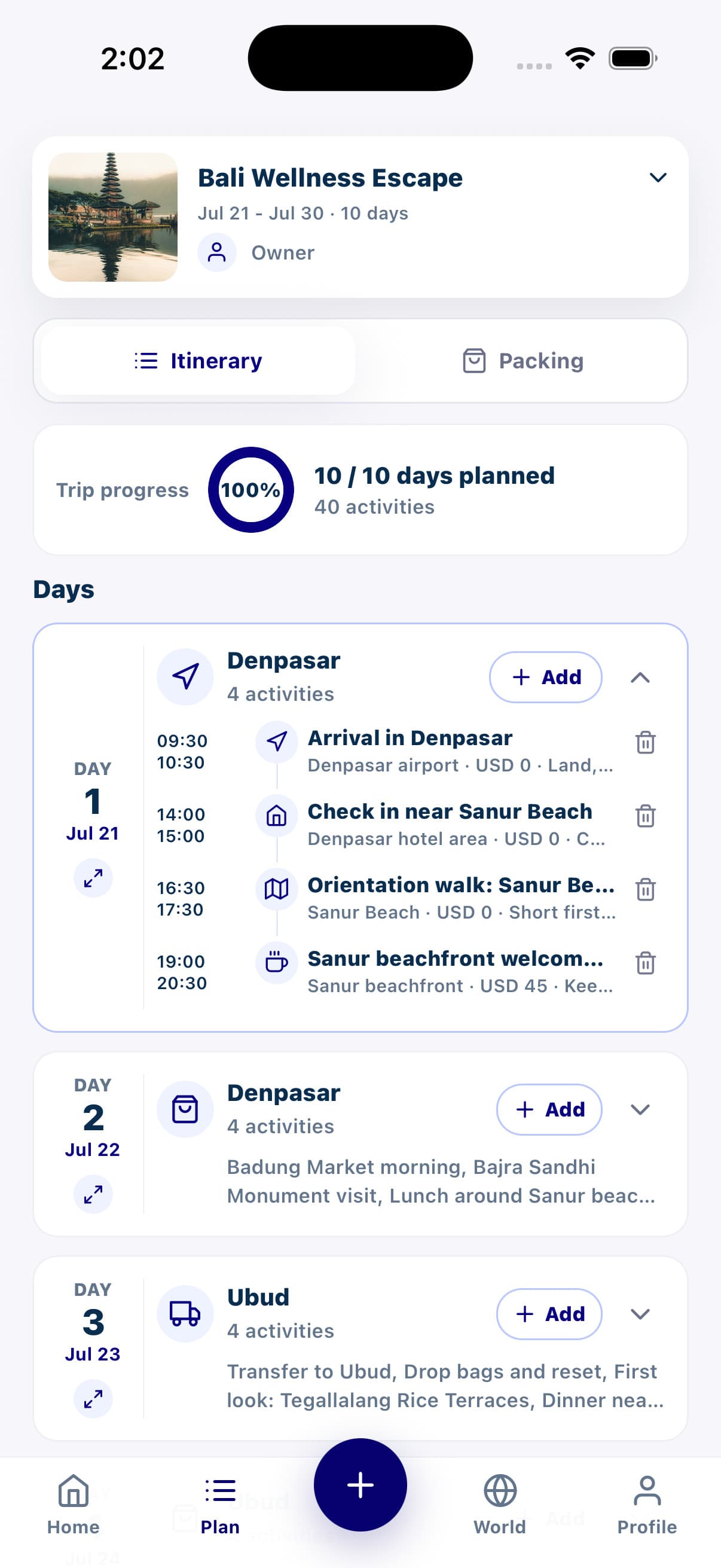
Common questions
Is 10 days enough for Rome, Florence and Venice?
Should I visit Rome, Florence or Venice first?
Do I need to reserve every attraction in Italy?
Can I add Pisa, Siena, Bologna, Murano and Burano?
Where should I stay in each city?
Does this itinerary account for Venice’s access fee?
Can I import this itinerary into Oreviyo?
Sources and useful links
Researched by Oreviyo using the sources below, reviewed on August 29, 2026. The routes, quantities, and packing examples are our suggestions. Confirm current conditions, access, and booking details before you go.
- Italy destinations overviewItalia.it
- Rome historic centerItalia.it
- Colosseum, Roman Forum and Palatine ticketsParco archeologico del Colosseo
- Vatican Museums visitor informationVatican Museums
- Florence historic centerItalia.it
- How to purchase Uffizi ticketsUffizi Galleries
- Accademia Gallery ticketsGalleria dell’Accademia di Firenze
- Frecciarossa networkTrenitalia
- Venice access-fee portalComune di Venezia
- St Mark’s Basilica official ticket portalProcuratoria di San Marco
- Doge’s Palace visitor informationFondazione Musei Civici di Venezia