Anywhere Travel planning
Your first solo trip: a practical planning guide
Your first solo trip can be a long weekend in one place. Give yourself somewhere comfortable to sleep, a few things you want to do, and enough room to change your mind. This guide turns those decisions into a manageable four-day plan, from choosing a destination to getting through your first evening.
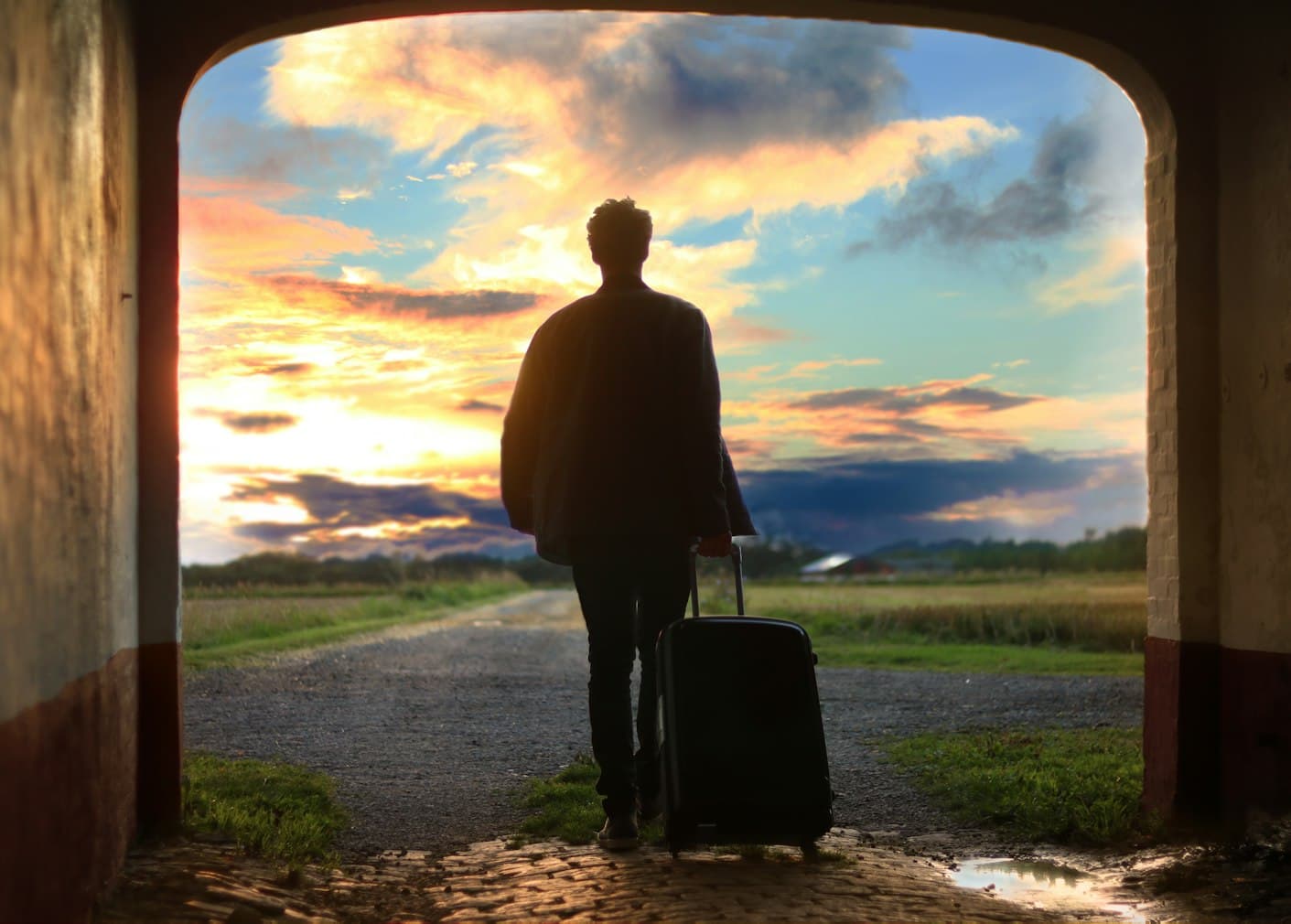
Photo: Mantas Hesthaven · Unsplash License · Cropped for layout.
- Best for
- Your first independent trip
- Example
- 4 days, 3 nights, 1 base
- Planning style
- Fixed essentials, flexible days
In this guide
The short version
How do you plan your first solo trip?
Choose a destination you can comfortably manage
Start with three places you want to visit. A nearby city or a familiar country can make an excellent first choice. Compare the whole journey, including getting home, rather than letting a cheap outbound fare decide.
Swipe or scroll to see all columns.
| Decision | Look for | Ask yourself |
|---|---|---|
| Getting there | A straightforward route and workable arrival time. | How many unfamiliar connections will I manage with my bag? |
| Getting around | Transport information you can understand and routes that suit your mobility. | Can I reach my main activities from one base? |
| Daily enjoyment | Two or three things you would happily do independently. | Would I enjoy this trip even if I met nobody? |
| Total cost | Accommodation priced for one person and realistic transfer costs. | Can I afford a change of plan as well as the advertised trip? |
| Personal fit | Current destination advice relevant to your circumstances. | What local conditions, accessibility needs or identity-related risks should I research? |
Use current advice from your own government and the destination’s official authorities when making the decision. Risks can differ by location and by traveler; a general reputation does not settle the question. See Smartraveller’s advice on researching a solo trip.
Book a base that makes the day easier
For this first-trip example, stay in the same accommodation for all three nights. Compare the location on a map with your arrival stop and planned activities. A cheaper room can lose its advantage when every outing needs another transfer.
Read recent reviews for noise, staff availability and check-in difficulties. Confirm the actual room type, reception hours, luggage storage and full price for one guest. Choose a private room if that gives you the rest you want. If considering a dorm, check its sleeping arrangements, secure storage and shared facilities before deciding whether they suit you.
Keep one alternative property in your notes. The UK’s solo travel guidance recommends booking your first night, researching the location and having an accommodation backup. Check locks and fire exits when you arrive.
Build a budget for one person
Price the trip with your own dates before booking. You may pay the full room or taxi charge yourself, so a per-person price based on two people sharing is a poor starting point. Check taxes, baggage, breakfast and cancellation conditions alongside the headline rate.
Swipe or scroll to see all columns.
| Item | Example calculation | Amount |
|---|---|---|
| Accommodation | 3 nights × $70 | $210 |
| Food | 4 days × $30 | $120 |
| Local transport | 4 days × $10 | $40 |
| Arrival and departure transfers | A separate allowance for both journeys | $40 |
| Activities | Two paid activities plus free time | $60 |
| Planned destination spending | $210 + $120 + $40 + $40 + $60 | $470 |
| Unallocated reserve | An illustrative extra 20% of $470 | $94 |
| Destination spending plus reserve | $470 + $94 | $564 |
Add travel to and from the destination, insurance, connectivity and any applicable document costs separately. The reserve is a planning example; choose your own amount for plausible disruptions. Check that you can access money if your usual payment method fails. The FCDO travel checklist explains this preparation and checking insurance against your destinations and activities.
Write the first few hours before you leave
Where practical, choose a daytime arrival. Save the accommodation address, check-in instructions and contact number, then identify your intended transfer and a fallback. Confirm operating hours with the transport provider. Smartraveller recommends daytime arrivals and planning airport transfers.
Your first evening only needs three jobs: reach your room, get something to eat and settle in. Find a nearby meal option in advance, without making it a reservation you must race to keep. If you arrive early, check whether the property can hold your bag; early room access is a separate question.
A four-day, three-night plan you can adapt
This example suits a city break with a day trip within reach. Replace each activity with something you actually enjoy. Check opening days, travel times and booking conditions before assigning dates.
Swipe or scroll to see all columns.
| Day | Main plan | Leave flexible |
|---|---|---|
| Day 1 · Arrive | Transfer, check in or store your bag, then take a short neighborhood walk. | An easy dinner near your accommodation and an early finish. |
| Day 2 · Get oriented | Join a morning walking tour or visit the museum you most want to see. | Lunch, a nearby neighborhood and a long café break. |
| Day 3 · Choose your pace | Take one researched day trip, or book a local class if you want company. | Stay in the city if weather, energy or transport make that more appealing. |
| Day 4 · Leave room to leave | Have breakfast, pack and make your confirmed departure journey. | One nearby stop only if check-out, luggage storage and departure timing allow it. |
Put fixed plans into your daily itinerary with times, locations, notes and costs. Check journey times separately. Keep optional ideas in notes instead of turning every gap into another commitment. For a longer trip, our seven-day Japan route shows how to pace days across several bases.
Pack a bag you can handle yourself
Test the packed bag on stairs and a short walk. For three nights, start with repeatable outfits and one comfortable pair of walking shoes. Adjust layers to the forecast; add specialist equipment only for planned activities.
You can adapt the packing list generator to your trip length, weather and activities, then create your own personal list in Oreviyo.
Give yourself both company and quiet time
If meeting people matters to you, book one activity built around a shared interest: a cooking class, guided walk or small workshop. Read the format and meeting instructions first. A structured activity gives the day a social anchor without depending on a chance conversation.
Keep time for things you enjoy alone too. Bring a book to lunch, repeat a favorite café or spend longer in one gallery. If a lonely evening arrives, call someone familiar or choose a group activity for tomorrow. You do not need to fill every evening to make the trip worthwhile.
Make a small backup plan, then enjoy the trip
Agree regular check-ins with someone you trust and tell them about changes to your route. Save local emergency numbers and your own country’s consular contact details on paper as well as your phone. Keep your accommodation details private when meeting strangers and retain control over your journey home. See Smartraveller’s solo travel safety tips.
Use official, licensed and reputable taxis where needed. If a situation feels uncomfortable, leave it and seek help; the FCDO’s solo travel guidance covers transport, accommodation and responding to concerns. Before departure, use the foreign travel checklist to review documents, current destination advice and access to important information.
Each evening, decide what tomorrow needs: a booking, a weather check or simply more rest. Move optional activities first. Keep cancellation deadlines in your notes so flexibility is a decision you can afford.
From reading to ready
Give your first solo trip a plan you can adjust
Organize each day in Oreviyo with activities, times, locations, notes and costs. Add your arrival details first, then build the days around the things you want to do.
Explore the Oreviyo itinerary planner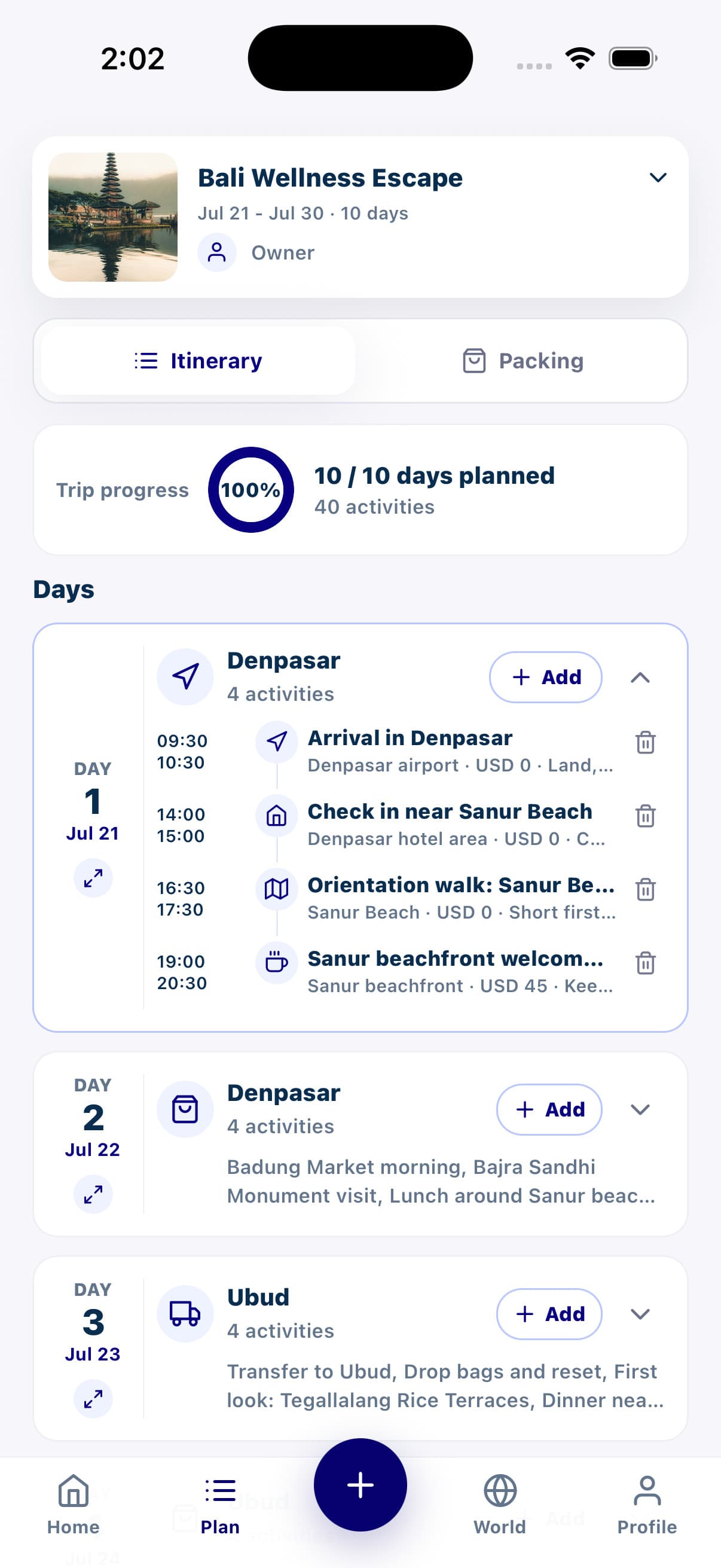
Common questions
How long should a first solo trip be?
Which destination is best for a first solo trip?
Do I have to stay in a hostel to meet people?
Should I book everything before a solo trip?
Does the checklist save to my Oreviyo account?
Sources and useful links
Researched by Oreviyo using the sources below, reviewed on September 3, 2026. The routes, quantities, and packing examples are our suggestions. Confirm current conditions, access, and booking details before you go.
- Solo and independent travelUK Foreign, Commonwealth & Development Office
- Foreign travel checklistUK Foreign, Commonwealth & Development Office
- Safety tips for solo travellersAustralian Government — Smartraveller