Anywhere Group travel
How to plan a group trip everyone can enjoy
A good group trip starts before anyone books a flight. It starts when everyone agrees what they can spend, when they can go, and how much of the trip they want to share. This guide takes a trip with friends from the first conversation to the first meeting point, with a planning timeline and a four-person weekend example you can adapt.

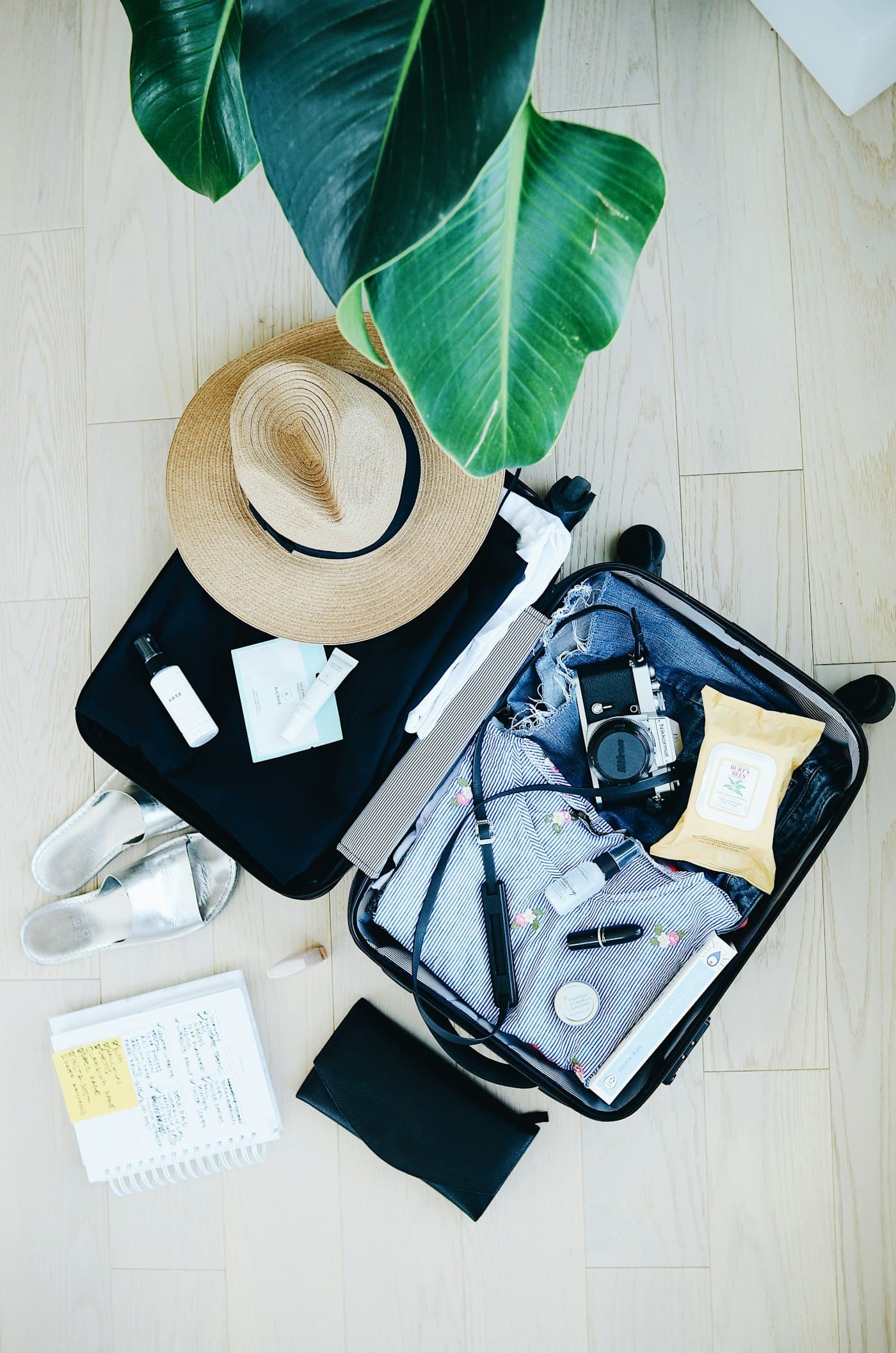
Photo: Stefan Fussan · CC BY-SA 4.0 · Cropped for layout.
- Best for
- Friends, couples and family groups
- Worked example
- Four people, three days, two nights
- First decisions
- Dates, budget and pace
- Planning habit
- One owner for each agreed task
In this guide
The short version
Agree on the limits, then build the fun around them
Choose dates, a per-person budget and a comfortable pace first. Shortlist two destinations, confirm who is coming, and get agreement before making shared bookings. Give each booking one owner, put confirmed details in one itinerary, and leave some time for people to do their own thing.
Start with a short trip brief
Ask each traveler for their available dates, departure city, comfortable spending limit and one thing they would love to do. Include room-sharing preferences, food needs, mobility requirements and how much walking feels enjoyable. Offer a private way to share personal constraints with the organizer.
Define what the budget includes. “500 each” means little until everyone knows whether flights, meals and activities are inside it. Someone may want a quiet beach break while another imagines a full sightseeing schedule. Discover that before comparing hotels.
Keep the brief short enough to read on a phone. When a new suggestion appears, compare it with those decisions. An extra city is a bigger change than a different restaurant because it affects luggage, transport and how much time you have together.
Choose between two workable options
Set a reply deadline for dates, then compare two options that everyone can realistically reach. Put the total travel time beside the fare: a cheaper flight with a late arrival may remove most of the first evening. Look at the last person’s arrival and the first person’s departure when calculating your shared time.
Swipe or scroll to see all columns.
| Decision | What to put beside each option |
|---|---|
| Travel | Arrival and departure times, airport or station, and the journey to your accommodation. |
| Accommodation | Total for all nights, usable beds, bathrooms, access needs, location and cancellation terms. |
| Shared time | The meals and activity blocks when everyone will be there. |
| Total cost | Travel, accommodation, transfers, meals, activities and a personal buffer. |
Use a vote to choose between feasible options. If an option exceeds someone’s limit or cannot meet an access requirement, revise it before voting. Record the final choice and who has confirmed; silence should not become a booking commitment.
Separate shared costs from personal spending
Here is an illustrative budget for four adults on a three-day, two-night break. The amounts are invented planning figures in euros, not destination prices or a recommended spending level. Replace every line with a quote for your dates. Travel to and from the destination is separate.
Swipe or scroll to see all columns.
| Shared item | Group total | Per person, split equally |
|---|---|---|
| Accommodation for two nights | €480 | €120 |
| Arrival and departure transfers | €120 | €30 |
| One agreed group dinner | €160 | €40 |
| One shared activity | €120 | €30 |
| Total shared plan | €880 | €220 |
In this example, a traveler allowing another €90 for their other meals, local transport and personal extras, plus a €40 buffer, would plan for €350 plus their return travel. The buffer stays theirs unless the group agrees to use it.
Equal splitting works only when everyone agrees. Different room types, different lengths of stay or an optional activity may call for separate shares. Record the total, currency, who paid and who owes what in an expense record. Check any bank or currency-conversion charges before settling up.
Give each booking an owner and a deadline
Divide the work into concrete tasks. “Sort accommodation” needs an owner, a decision date and a definition of done: the agreed place is booked, room arrangements are confirmed, and everyone can find the address and check-in instructions.
Swipe or scroll to see all columns.
| When | Group decision | Owner’s next action |
|---|---|---|
| Before any booking | Dates, budget, travelers and room needs | Share two complete options and collect explicit replies. |
| Once everyone agrees | Travel and accommodation | Book only the approved arrangements; record references and terms. |
| After the main bookings | One or two priority experiences | Confirm participants, availability and the final price before paying. |
| One week before | Arrival plan and shared packing | Check addresses, arrivals and item owners; remove duplicate tasks. |
| The day before | Any changes and the first meeting | Recheck transport updates and make essential details easy to access. |
This is a sequence, not a promise that one week is enough to book a popular attraction. Work backwards from real reservation deadlines. Let one person coordinate the overall plan while others own accommodation, an activity or shared packing.
Build a weekend with room to split up
Give each full day one shared anchor. That might be a museum, a walk or a long lunch. Set a meeting place and time, then let the surrounding hours breathe. People should be able to skip an optional plan without changing everyone’s day.
Swipe or scroll to see all columns.
| Day | Together | Flexible |
|---|---|---|
| Friday: arrivals | Meet at the accommodation after the last arrival; easy dinner nearby. | Early arrivals can walk or rest. Avoid prepaid plans tied to everyone arriving on time. |
| Saturday: the main day | One morning activity and an agreed dinner. | An afternoon for shopping, a second sight or a break; share the dinner meeting point. |
| Sunday: departures | Breakfast if departure times allow. | Keep luggage collection and station or airport transfers ahead of extra sightseeing. |
For longer trips, borrow a route from the ten-day Italy itinerary or ten-day Thailand itinerary, then ask the group which stops matter most. Removing a stop can make room for more time together.
From reading to ready
Give everyone a place to find the plan
Invite your travel companions, choose view or edit access, and keep the itinerary and shared packing together. Add the decisions you have agreed so everyone knows what happens next.
Explore group trip planning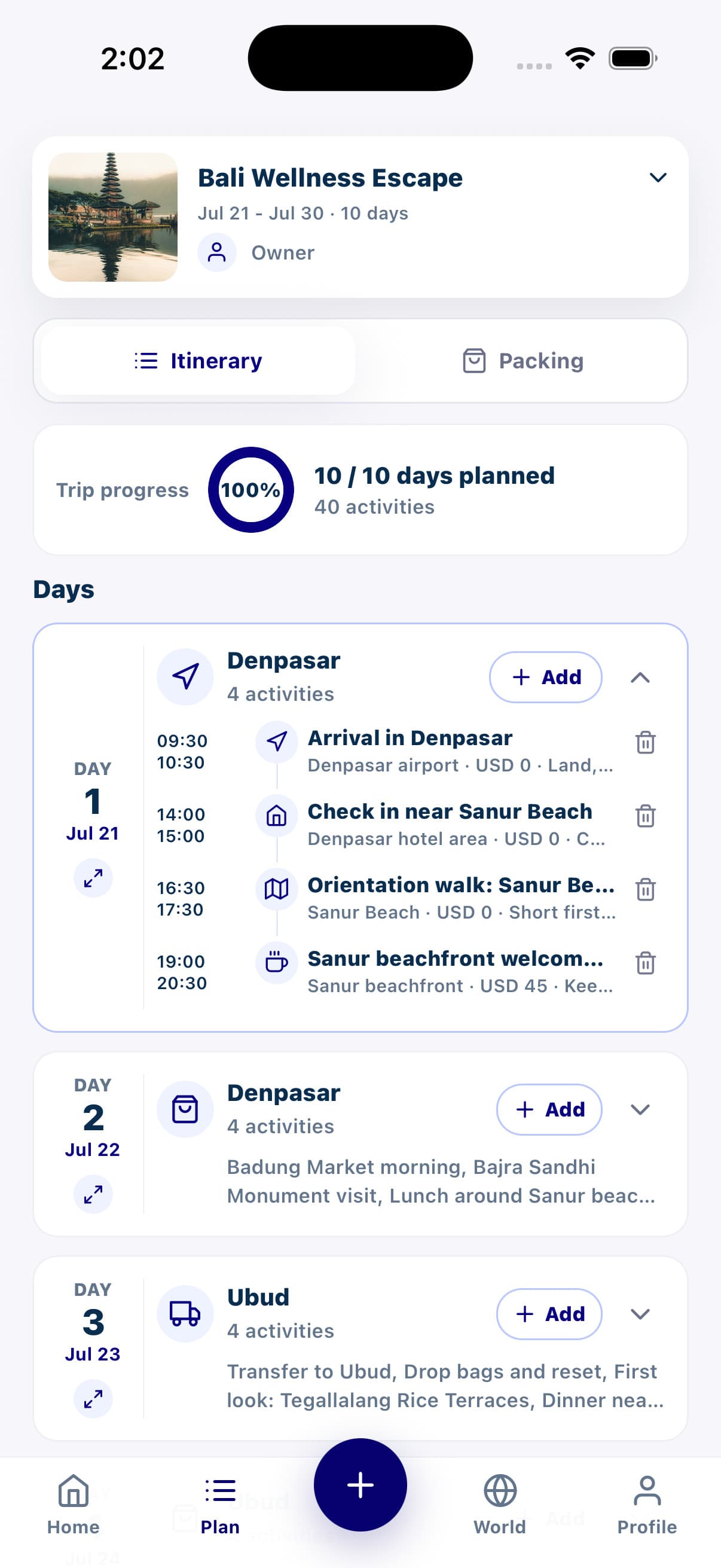
Common questions
What should we decide first when planning a group trip?
How far ahead should we plan a trip with friends?
Should one person pay for everything?
What if we want different activities?
Can Oreviyo organize a trip with friends?
Sources and useful links
Researched by Oreviyo using the sources below, reviewed on September 8, 2026. The routes, quantities, and packing examples are our suggestions. Confirm current conditions, access, and booking details before you go.
- International travel preparation checklist (for U.S. travelers)U.S. Department of State